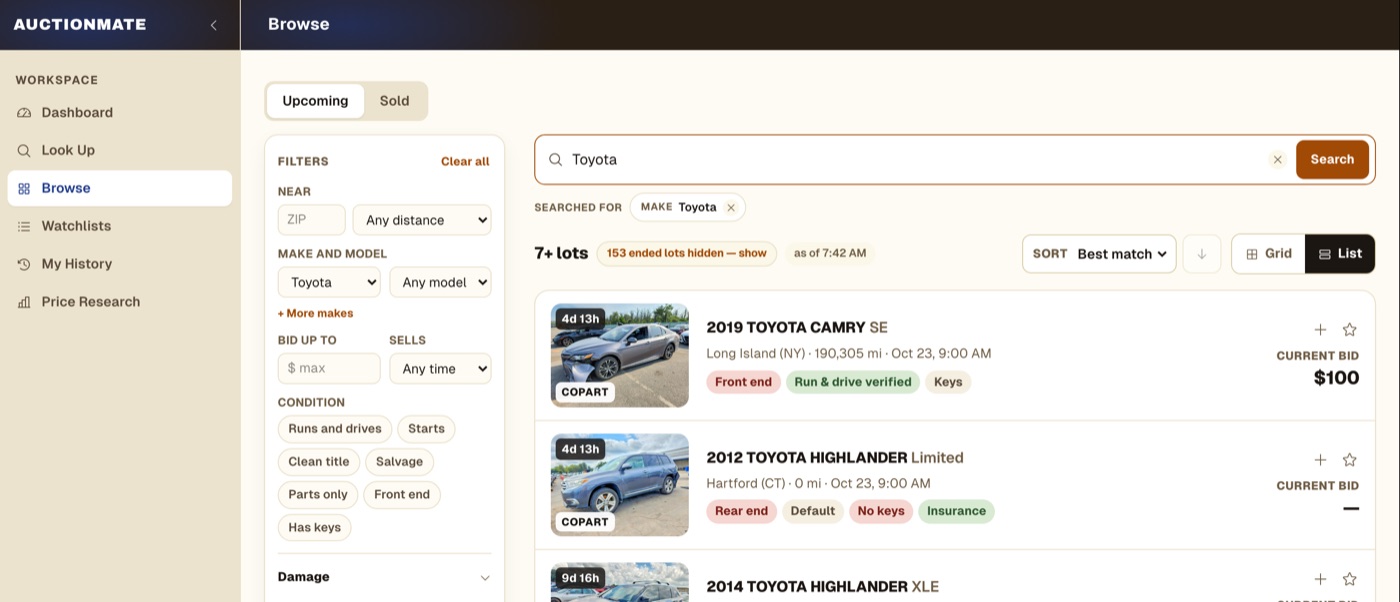
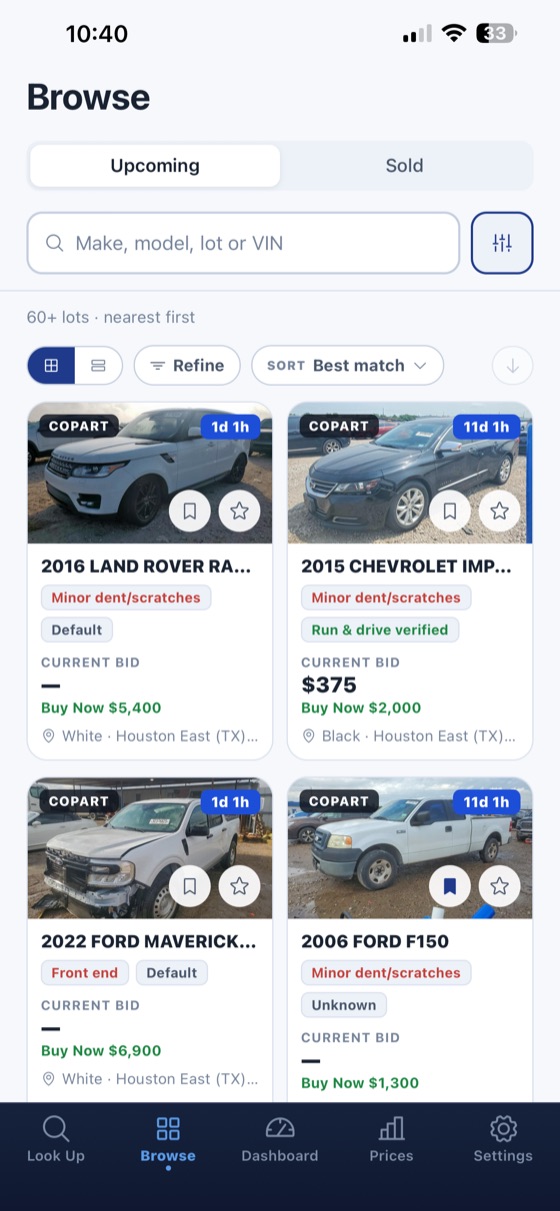
Live auction lots, read by one verdict engine — sometimes the answer is walk away.

One engine runs the verdict, the profit math, and the open-recall check — on the web, in your pocket, or pinned right next to the live auction. Your saves, settings, and watchlist follow you across all of them.
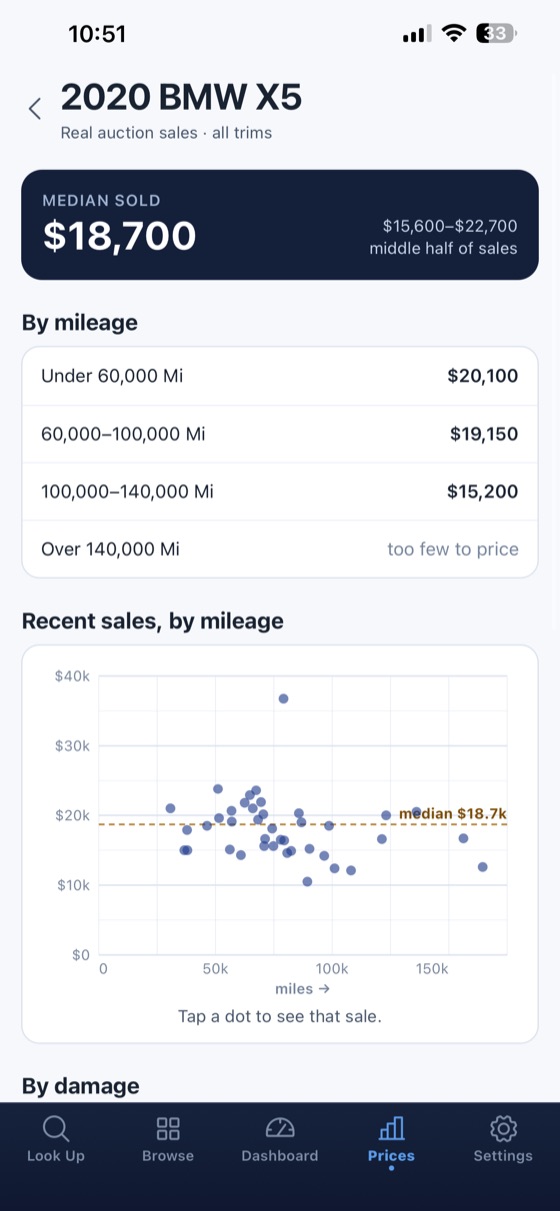
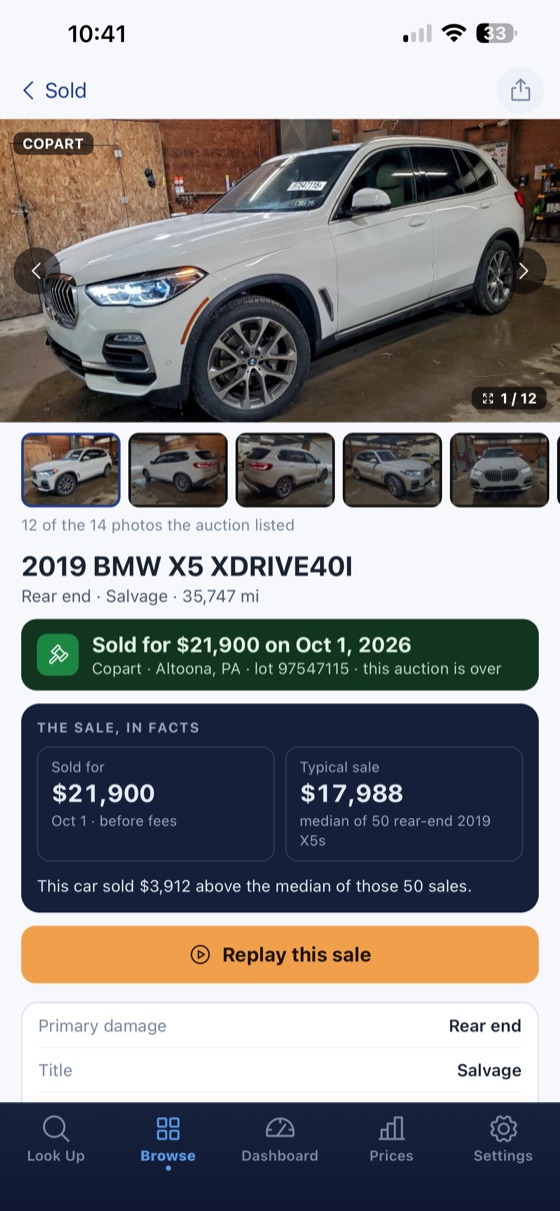
The full workbench — look up any VIN, browse live Copart & IAAI inventory, track your watchlist.
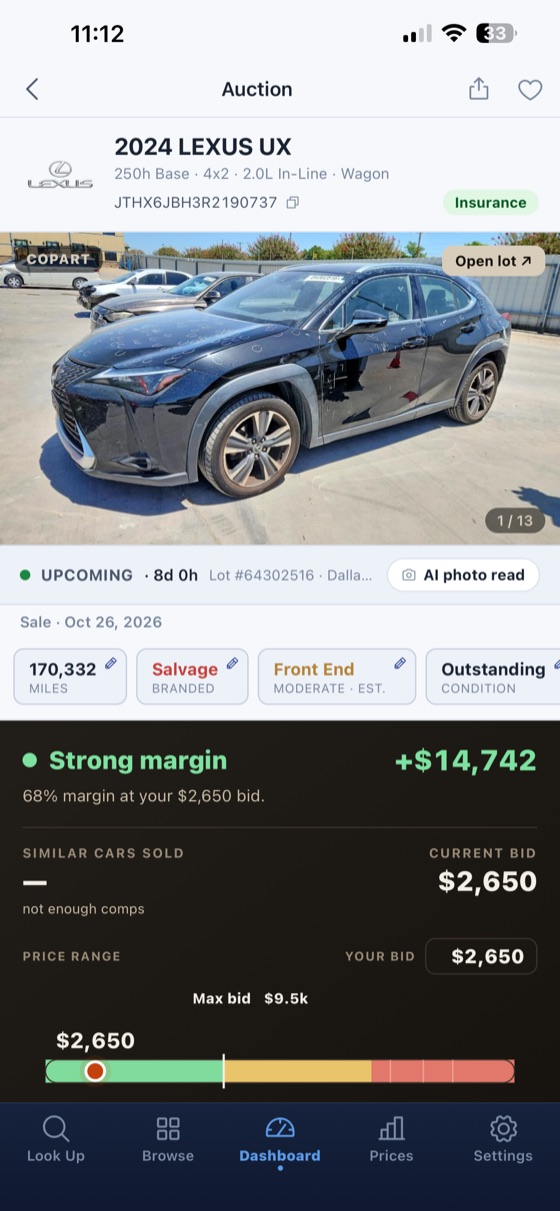
Open the App →Full parity with the web — browse, analyze, and get sale-day alerts from the auction lane.
App Store — soonSame app, same account — the Android app is in final testing alongside iPhone.
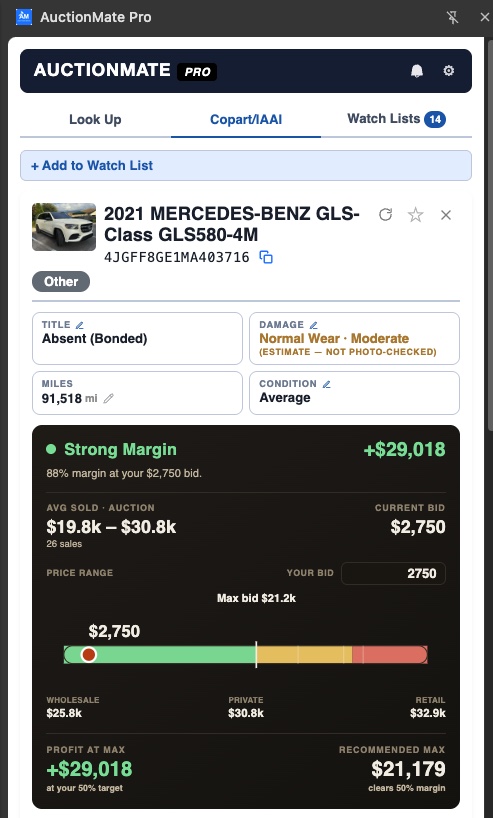
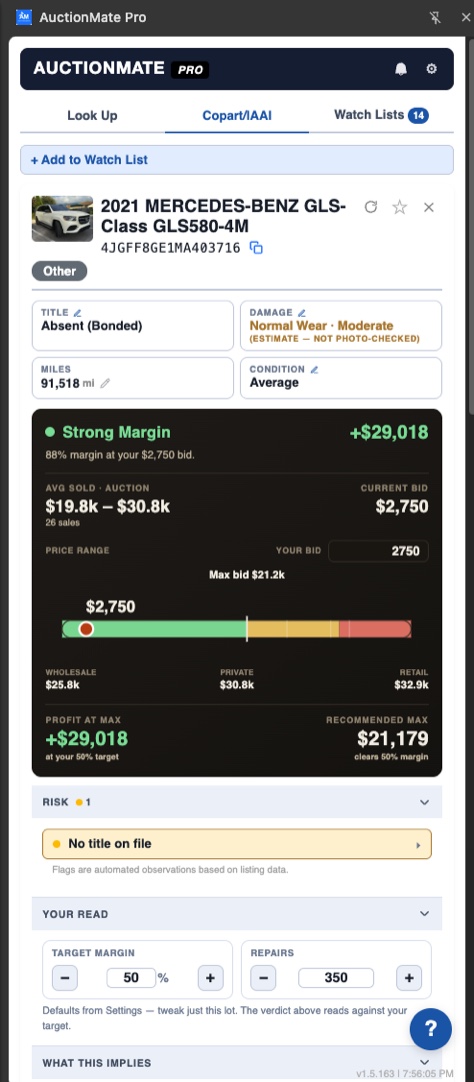
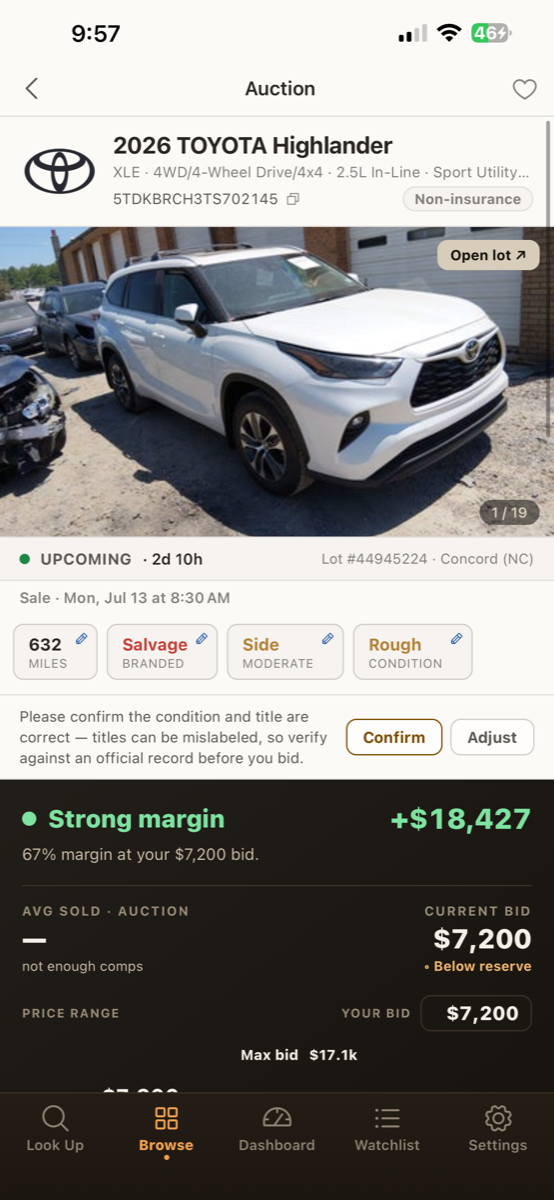
See the apps →The side panel that reads the lot you’re looking at — verdict on the page, while you bid.
Add to Chrome →If you buy salvage cars for resale or rebuild, you’re sourcing from auctions that publish photos, a damage label, and not much else. The estimating tools that exist were built for someone else.
Copart and IAAI listings give you photos and a damage label. They don’t tell you what the car is worth, what the repair will cost, or whether the title brand will tank resale.
Most estimating software is designed for insurance carriers paying for repairs. It doesn’t price salvage exits, doesn’t flag relisting patterns, and starts at four figures per seat.
A repair estimate from a body-shop guide doesn’t help if the car is salvage and resells well below clean retail. The math has to start from the floor.
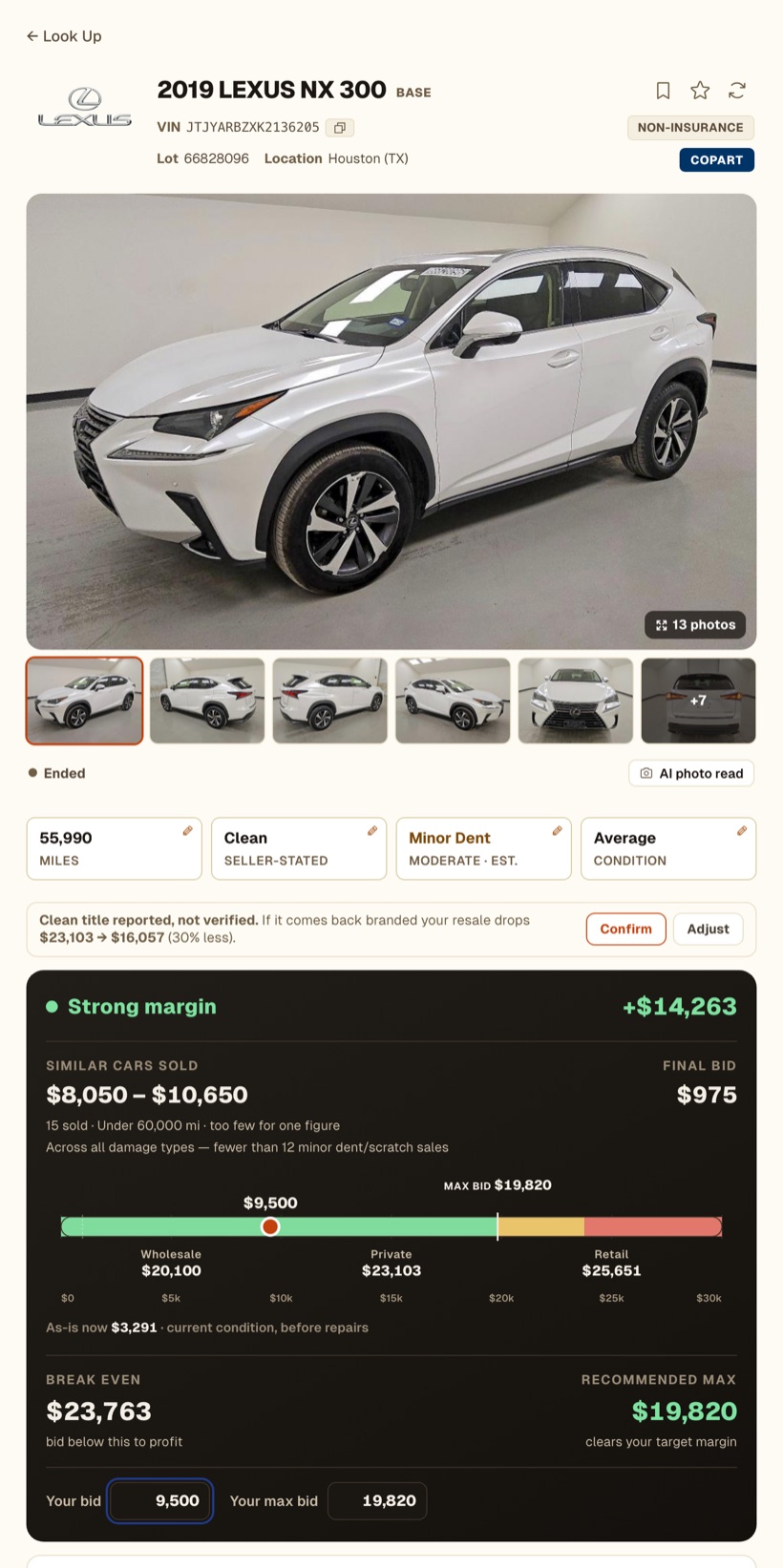
The engine doesn’t cheerlead. Watch it read three example lots — and tell you to walk away from one of them.


The good one.
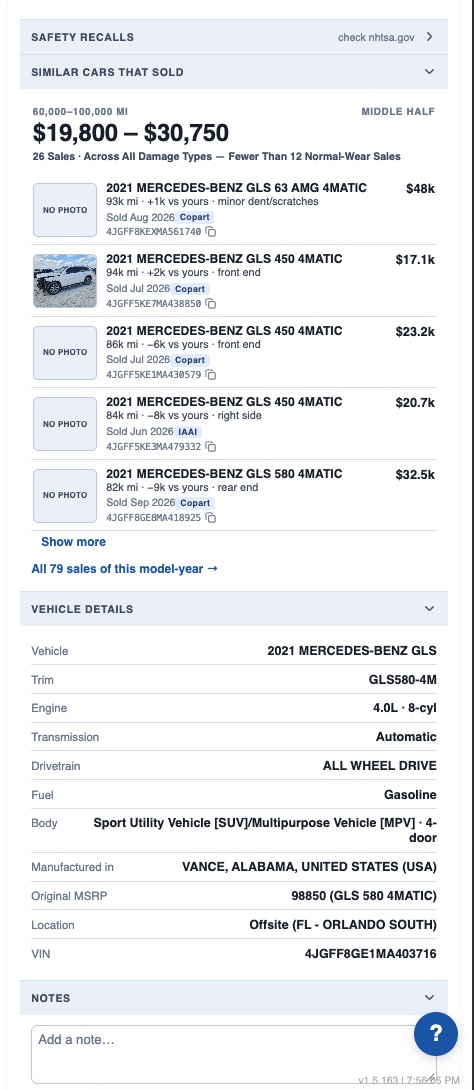
The verdict starts from what rebuilt cars actually sell for — realized auction comps, title-brand impact, and your own recon numbers — not from a clean-retail book value with a discount slapped on.
A salvage-title Lexus and a salvage-title Audi don’t lose value at the same rate. We adjust title discounts by parts-ecosystem and vehicle class, not by body style.
Severity tiers calibrated against historical auction outcomes. Repair estimates are anchored to real-vehicle market value, not generic shop rates.
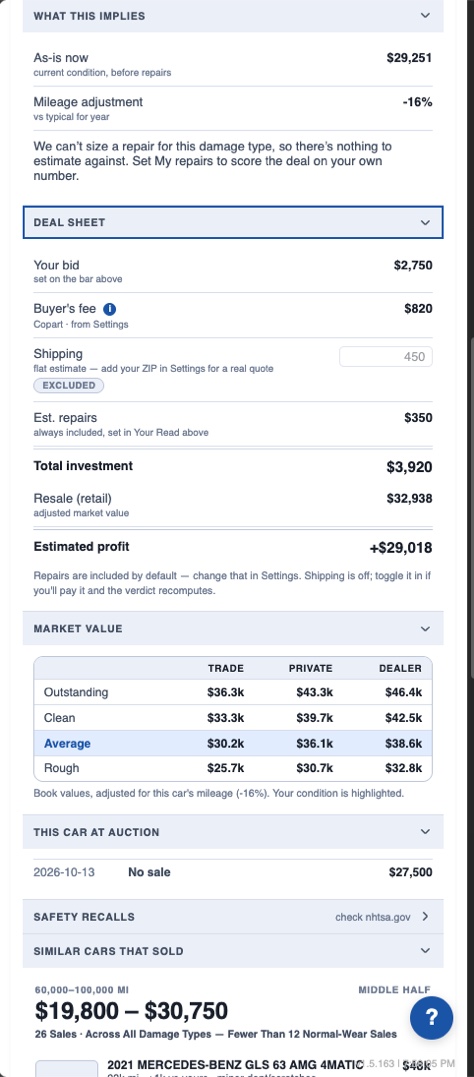
Strong Margin / Thin Margin / Below Cost / Parts Only — thresholds are transparent and editable. Every line of the math is visible in the profit-and-decision card.
When reconditioning gets too expensive relative to resale, the verdict drops to Parts Only automatically. The auction floor is built into the model from day one.
Paste a VIN or a Copart/IAAI link.